

In Pu’er Making Coffee
adapted from an 2024 essay.

In Pu’er, I got to have the kind of mornings I long missed. I learned to get up at 8 am. Superficially it was a requirement: at 8:30 I meet up with other volunteers and staff at Torch Coffee, get in a secondhand pickup, and head towards our coffee farm on the mountain. Can’t miss the pickup — there won’t be another one. Between 8:15 and 8:30, this little part of Pu’er was also just slowly waking up while the sky turns pink and baby blue. Next to our pick-up point at the storefront of Torch Coffee I could get a sweet steamed baozi stuffed with pine nuts, sugar and lard. Or a jumbo green mango to headline the lunch salad. The men and women at the fruit stand or the breakfast stand were incredibly quiet. All there was to hear was sporadic cars scratching the road.
Tao turns on the music. Most of the time he’s the driver. It was always a mix of what I secretly called the “old white men playlist”. Greatful Dead, Air Supply, Bob Dylan sometimes. I didn’t hate it. The greenness of the high mountains flew by. We never drive slow. Many mornings when I wasn’t fully awake I could take this Yunnan landscape as the highway somewhere in Oregon.
Located in China’s Southwest, bordering Myanmar and Laos, Yunnan is China’s foremost coffee region. It claims over 95% of China’s coffee production. Coffee entered Yunnan, like many other countries, with Jesuits missionaries in the 19th century, but it wasn’t until three decades ago that it boomed in this land known worldwide for its tea. Most Yunnan coffee farmers began by growing Catimor, a disease-resistant variety that guarantees productivity.
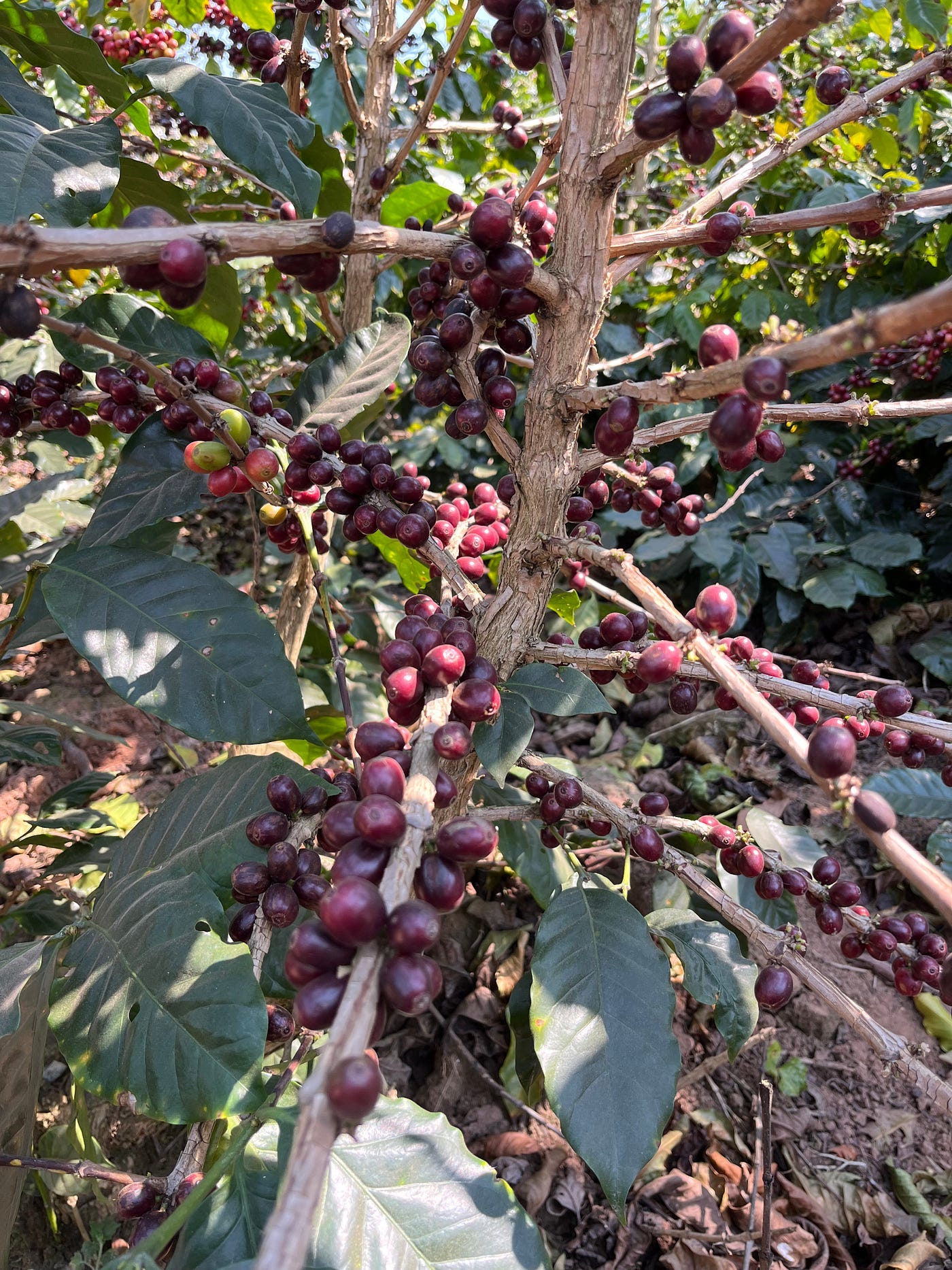
For a brief period of time in March 2024, I worked in Torch’s farm in Pu’er, Yunnan, an experimental, learning-based farm for coffee professionals and enthusiasts of any level of knowledge. Torch has been in Pu’er for 12 years. In these 12 years, coffee farmers who had never tasted their own coffee came to be cupping professionals, and “specialty coffee” ceased to be a foreign concept for the locals.
There I met Xiaoming who dropped out of college because he finally “found his calling” in coffee. “We tried to talk him out of it,” Tao said one afternoon in the pickup, “he wouldn’t listen. With a college degree you’d have many paths to choose from, right? He just had one semester left. Just left it at that.” Xiaoming worked in the farm for only a couple of months and he’s already tanned like everybody else. He didn’t seem to regret his decision.
I also met Liaoji, a girl in black. We never talked for the first two days. Stood together in front of the huller for a full steaming afternoon and didn’t say a word. She’s not one for the getting-to-know-you small talks. But she does the job. I open the drying beds in the morning, and she would be the one to always remember rolling the coffee fruits on the beds every two hours during the day.
Nobody, in fact, talked much with anybody during the work day anyway, because the sun’s always hot and day always dry in a good harvesting season, and furthermore, there was always something to do, something physical. Energy was spent on lifting fermentation barrels, washing other barrels, hulling, pulping. We don’t move kilograms, we move tons. So when the lunch break comes a nap is usually preferred. We all become more reticent on the mountains, and that permits us to hear more.
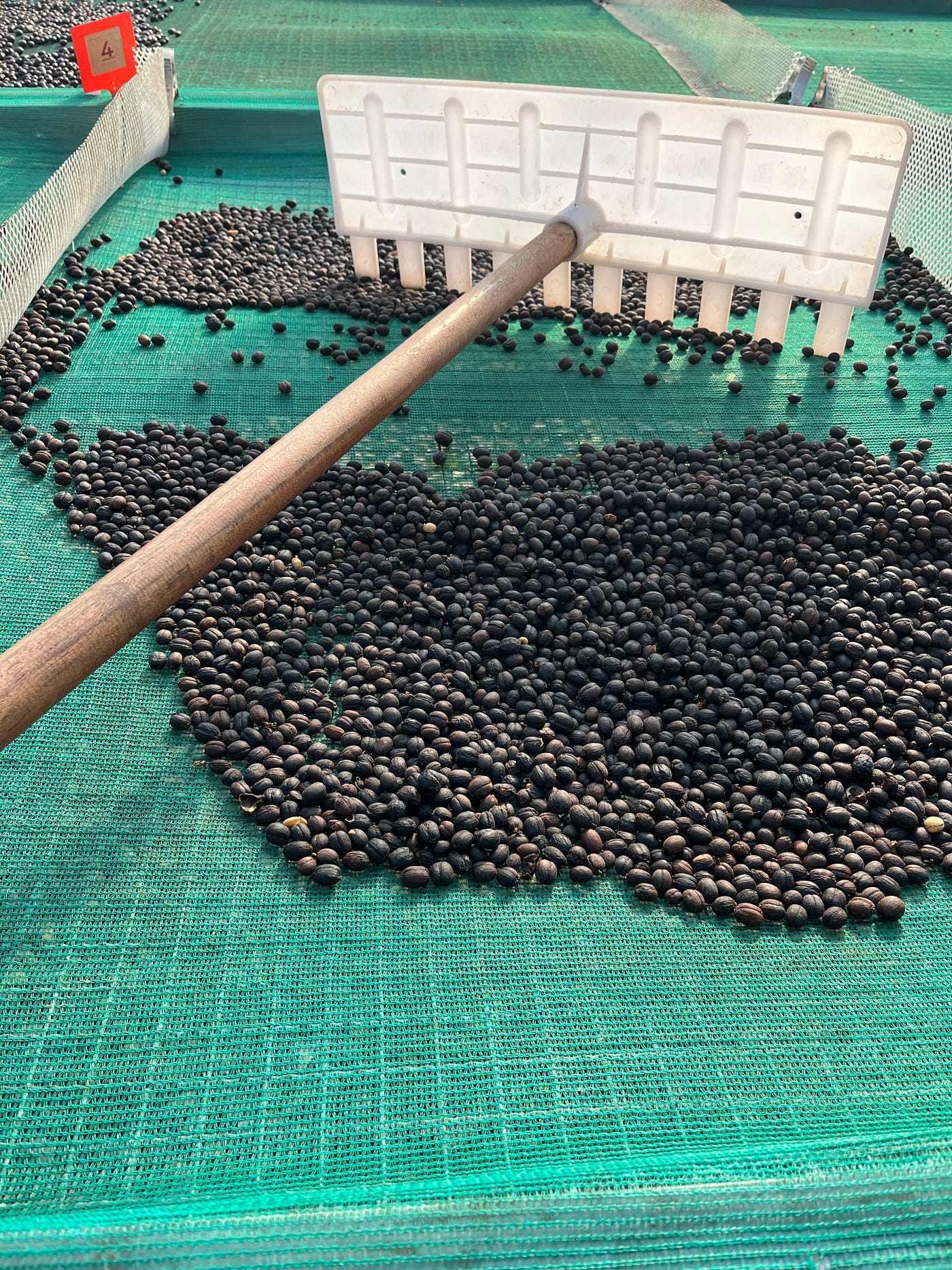
Fresh coffee fruits on the drying bed produce a different sound from the dried ones. The rake crawls through the watery fruits and they almost sound like rubber balls clenching together. They are also heavier. They roll against each other, the ones on the bottom of the bed turn up, the water and mucilage on their skins come out to reflect sunlight. The dried fruits sounded like oatmeal cookies, crisp and clean. The sound made me think of certain African percussion instruments.
One day we drove to the farms higher up the mountains to collect fresh coffee cherries. It was the first time I ever tasted a ripe coffee cherry. It was a maroon colored fruit with hard pulp. But it was also quite literally the sweetest pulp I had ever tasted. That good ripe coffee cherry is many times sweeter than cane sugar.
As I chewed the pulp to let the sugary content release, I registered that this has been one of the most visceral travels I’ve ever experienced. Not that the previous trips are devoid of sensory experiences — I just haven’t let them fully sunk in, like I was doing at that very moment, drowning myself in the sweetness of a coffee cherry. Everything happened, as I experienced it, within my taste buds and olfactory system and vision and hearing. It is as real as coffee is, growing from a seed in the soil in to a tree in the sun, always having a place where it comes from. The organism itself is always connected with, and infused with life. Working with coffee involves deep concentration — it’s almost meditative. From attending a fermentation tank, to cupping, to brewing, coffee requires you to immerse yourself, you senses, your mind.
Pu‘er is a lot of colors. The wings of those giant butterflies reflect sunlight and radiate a dazzling, illusory hue. Next to the central farmer’s market, in the after hours, fruit vendors of all kinds show up for an evening sales: mangoes, pineapples, papaya, avocados, passion fruits, cherries, strawberries. You name it. All across the spectrum, plus unidentifiable local colors. One local way to eat the fruits is to mix them with chili powder and salt. The other locality that does this is Mexico.
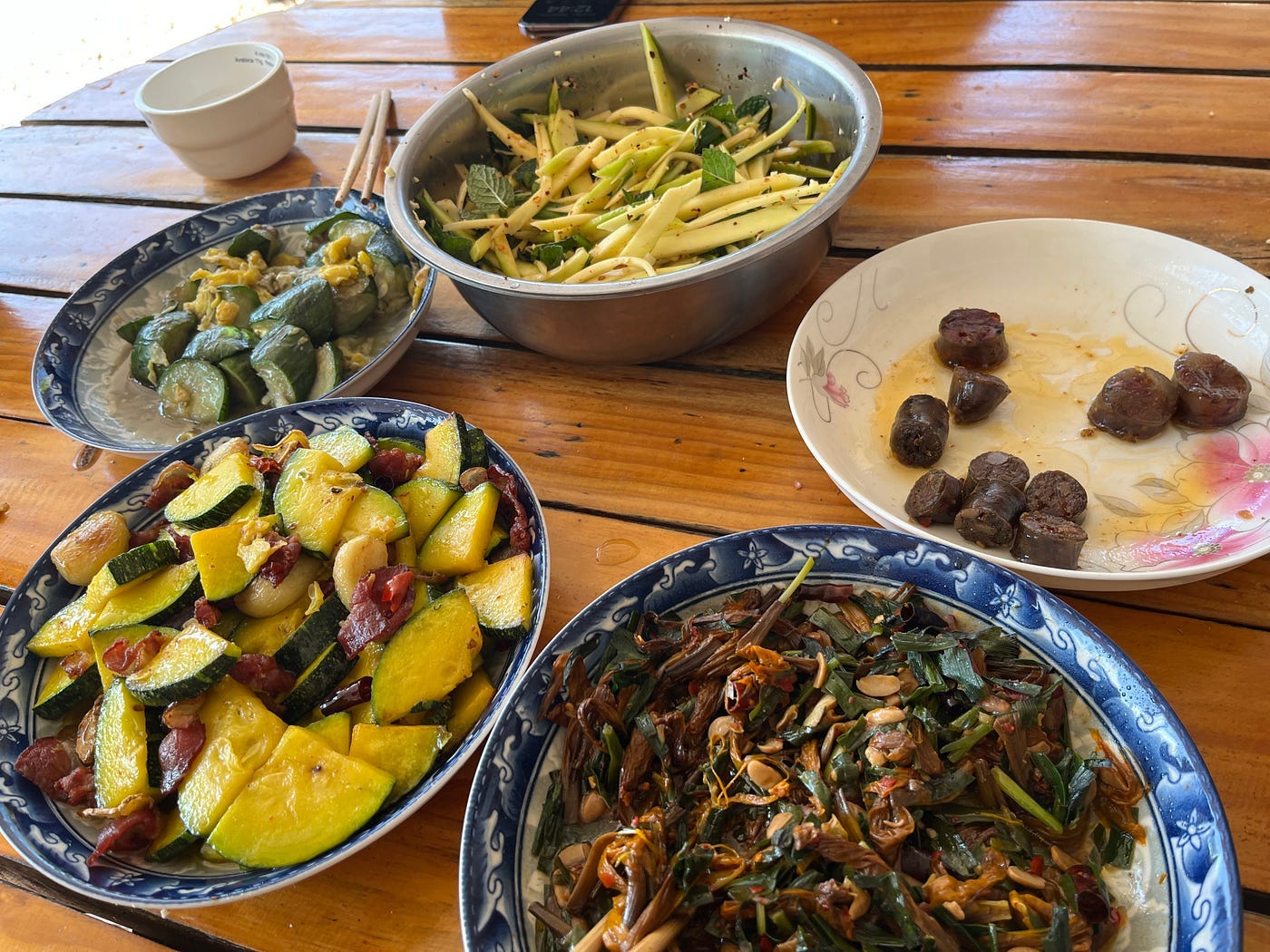
I made lunch for everyone working the farm. The summer salad comes with the sweet green mango and mint grown next to the coffee nursery. The mint was planted right below the small patio of our working station, along with other herbs and some cauliflowers. I chopped the leaves up in the outdoor kitchen, thinking that just a couple of minutes ago they were just there, soaked in the same sun as I was, growing from the field upholding all of us, and days later it will grow again. Life shares its bounty through its ever-changing forms and carriers; it always finds a way to be felt.
During the last lunch break I lay on the lounge chair facing the field, gazing at the sky. A vulture hovers on the far side of the horizon, searching the forest below. The cricket song fades in and out. The boys fell asleep fast. I kept myself attentive to the soundscape, each listening feels like diving into the water, attempting the river beds. This was my third time coming to Pu’er and I know what will keep me coming back. I have come to know this air, this sound, these trees, these people. I know that these mountains are home to my friends.
It’s 6 p.m. and I fit myself into the pickup once more. Driving by the same hills and fields, I noticed the terraces planted with coffee trees, among many other — tea, the most common crop, and macadamia. Ten years ago not too many people know that Yunnan produces coffee, even that China produces coffee. Coffee was under-appreciated, unattended, generally regarded to not have a future. In ten years things have been changing, and changing fast. Young coffee lovers of China have rediscovered Yunnan coffee, and are investing to diversify it, to improve its quality. The farmers, in turn, are motivated as well. I was moved by the sight of people here caring about the same things we care about, attending to trees that will turn out coffees that make someone’s day. That was something romantic, I thought.